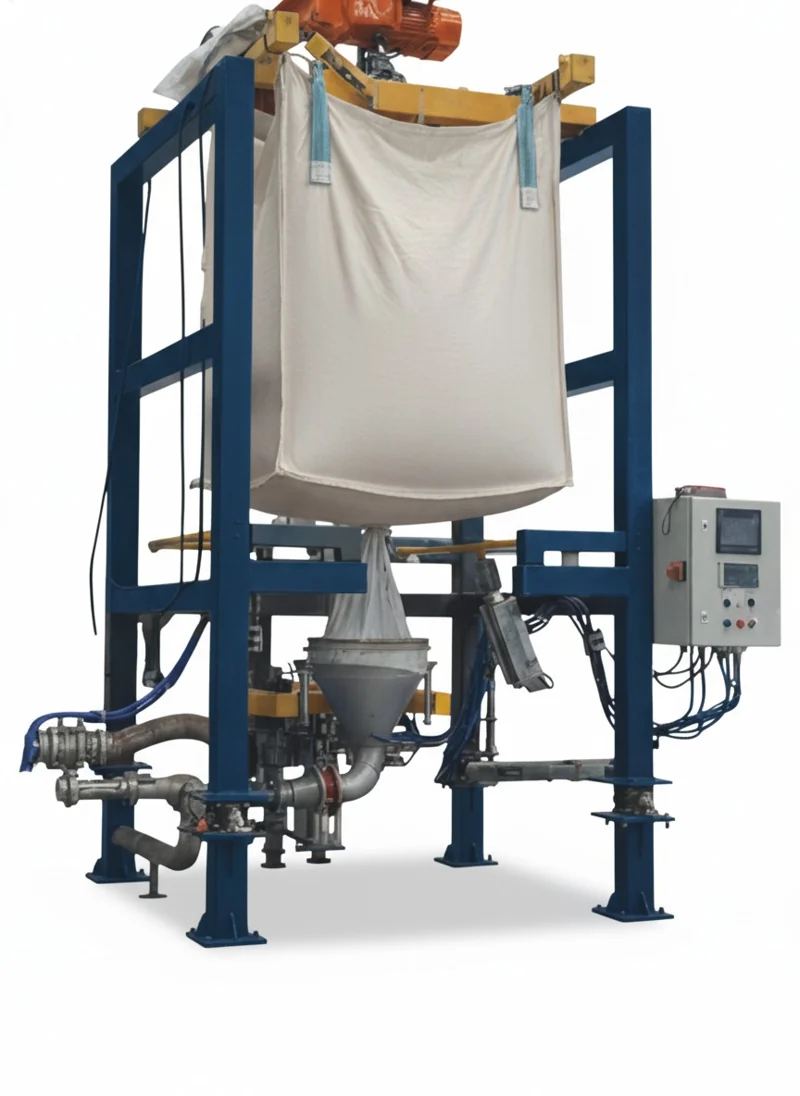
Forklift-loaded
For layouts with suitable forklift access and lifting clearance.
Bag lifting and positioning are planned around the forklift route, station height and receiving equipment.
Discuss forklift loading →Discharge · Contain · Connect
Unload powders and bulk solids through a contained bag connection. Select forklift, hoist or low-headroom arrangements, with flow assistance and conveying interfaces matched to the material and installation.
Material · Bag format · Loading method · Process layout
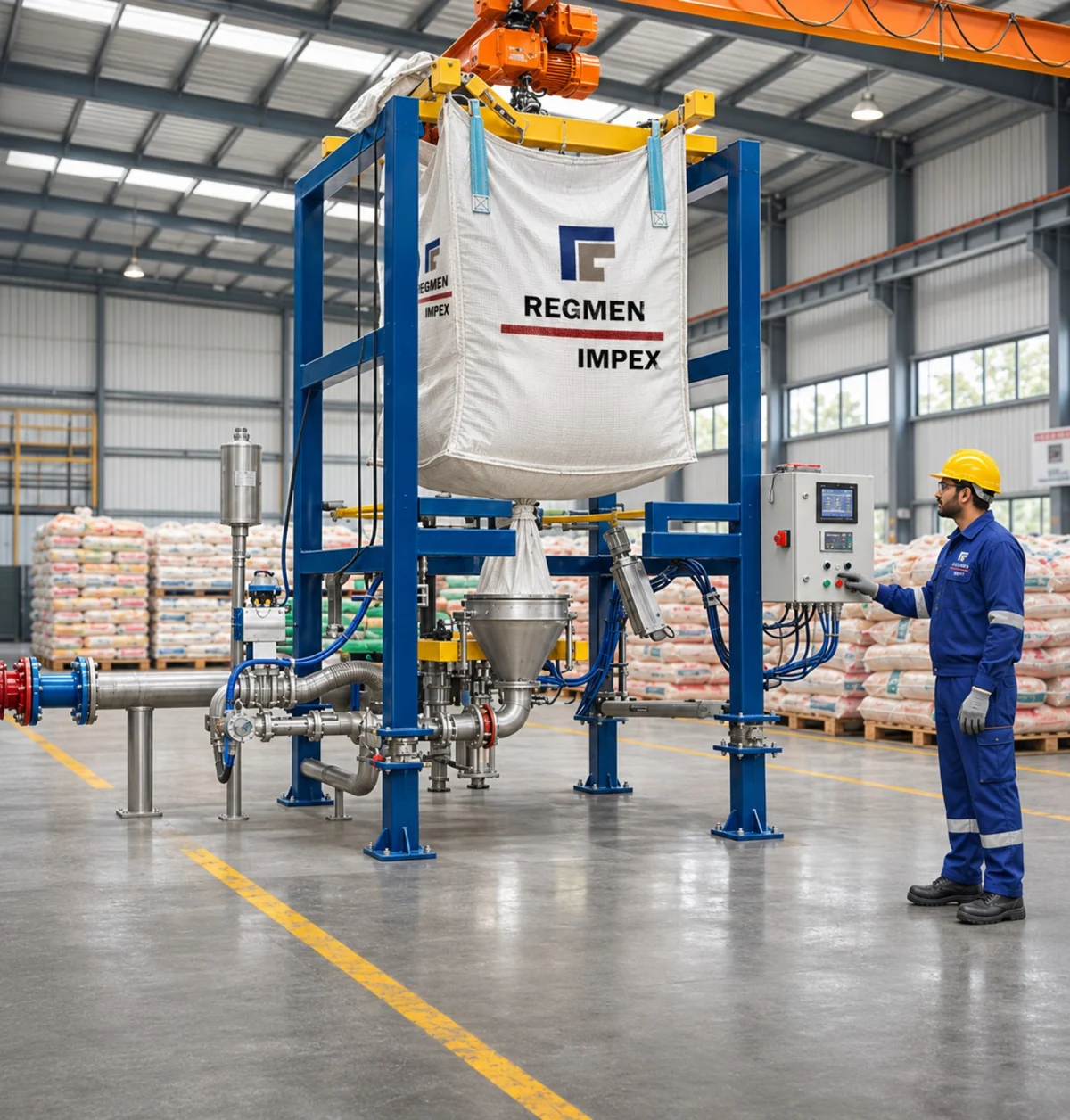 Jumbo bag discharger — factory setting illustrationView larger ↗
Three ways to approach the layout
Each arrangement is selected around your lifting access, bag dimensions, clear height and downstream discharge point.
For layouts with suitable forklift access and lifting clearance.
Bag lifting and positioning are planned around the forklift route, station height and receiving equipment.
Discuss forklift loading →For layouts requiring a crane-and-hoist bag loading arrangement.
The lifting arrangement, loading envelope and access to the bag connection are configured with the support structure.
Discuss integrated hoist loading →For compact process areas with restricted overhead clearance.
Explore the RJBU–ULH–1000 arrangement with loss-in-weight control, a contained bag connection and downstream interlocks.
Discuss ultra-low-headroom unloading →View RJBU technical details →Understand the equipment
Select a numbered marker to read about that part of the arrangement. The illustration shows one configuration; equipment and options vary by application.
The tubular frame and bag support arrangement are selected for the bag load, loading method and installation.
Connect the bag outlet to the receiving hopper. The selected sealing and access arrangement helps limit dust release at the connection.
Massagers, vibration or aeration can assist discharge of difficult materials. The method is selected from the material’s flow behaviour.
Coordinate weighing and discharge with the downstream process. PLC/HMI operation and interlocks form part of the selected control scope.
Connect the outlet to suitable receiving equipment or REGMEN vacuum conveying. Confirm the outlet geometry, access and transfer requirements.
Selection data
Use the range overview to define your requirement. Model ratings, utilities and performance are confirmed in the application-specific proposal.
| Unloading range | Bulk bags up to 2 tons; rated load confirmed for the selected model |
|---|---|
| Bag dimensions | Bag footprint, height, loops and spout dimensions assessed for each application |
| Loading arrangement | Forklift, crane and hoist, or low-headroom configuration |
| Support structure | Heavy-duty tubular frame; painted or stainless steel options |
| Product-contact parts | SS304 in the general range; selected grade confirmed for the application |
| Discharge connection | Contained spout connection and outlet matched to the receiving equipment |
| Flow assistance | Bag massagers or vibration assistance; method selected for the material |
| Dust management | Aspiration during bag changeover and optional dust filter |
| Conveying interface | Connection to REGMEN vacuum conveying and downstream process equipment |
| Installation envelope | Overall dimensions, headroom, discharge height and maintenance access confirmed with the layout |
Beyond the unloading station
Connect unloading with vacuum conveying, weighing and mixer feeding. REGMEN’s Auto Silica and Auto Carbon systems combine these operations for tyre and rubber production.
Connect the bulk bag to the unloading station.
Transfer material through the selected conveying arrangement.
Prepare a measured batch for the process.
Release material in step with downstream demand.
REGMEN equipment views
Design views illustrate equipment layouts. Final loading, access and discharge arrangements are configured for each project.
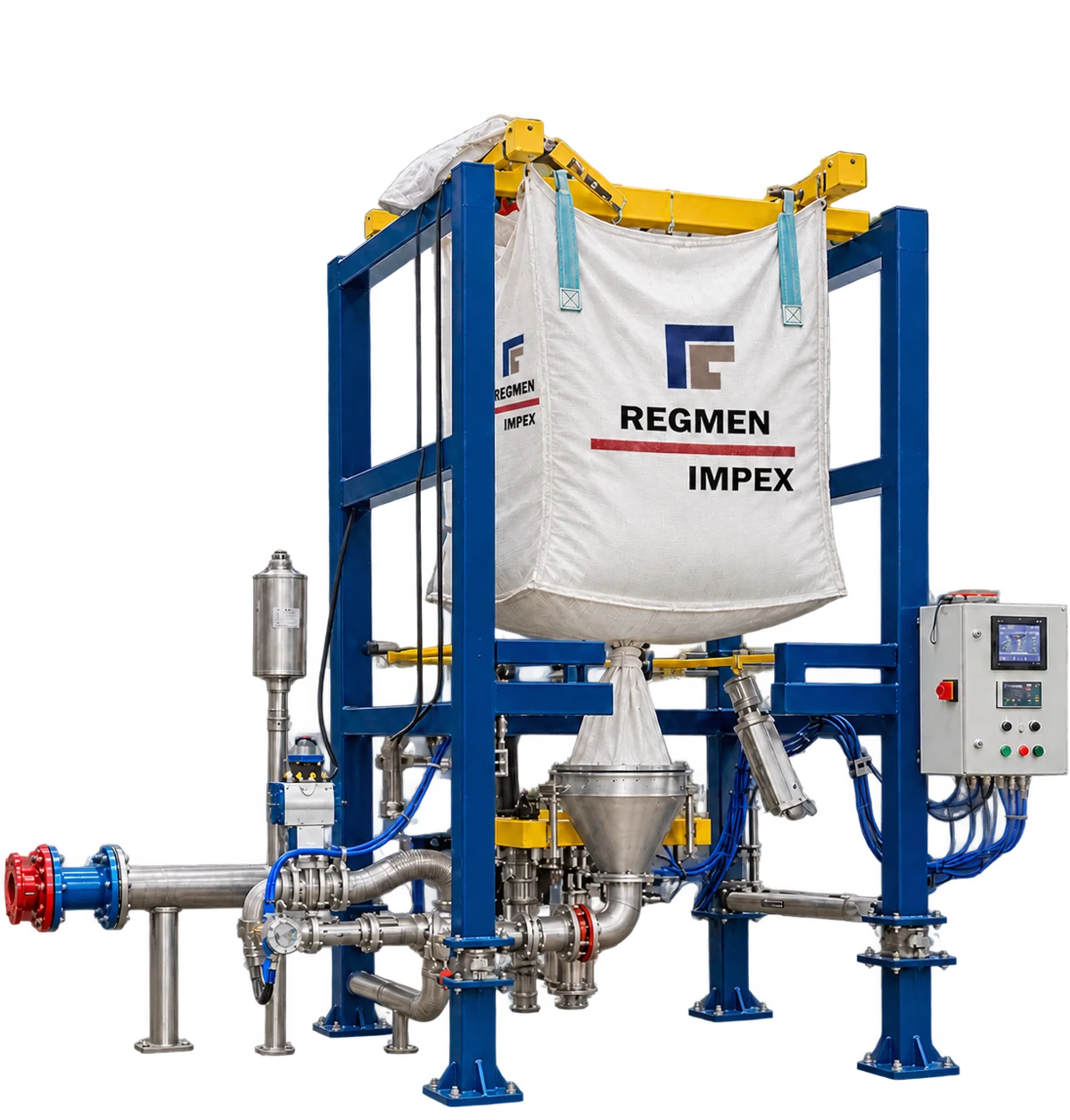 Jumbo bag discharger — design render Jumbo bag discharger — factory setting illustration
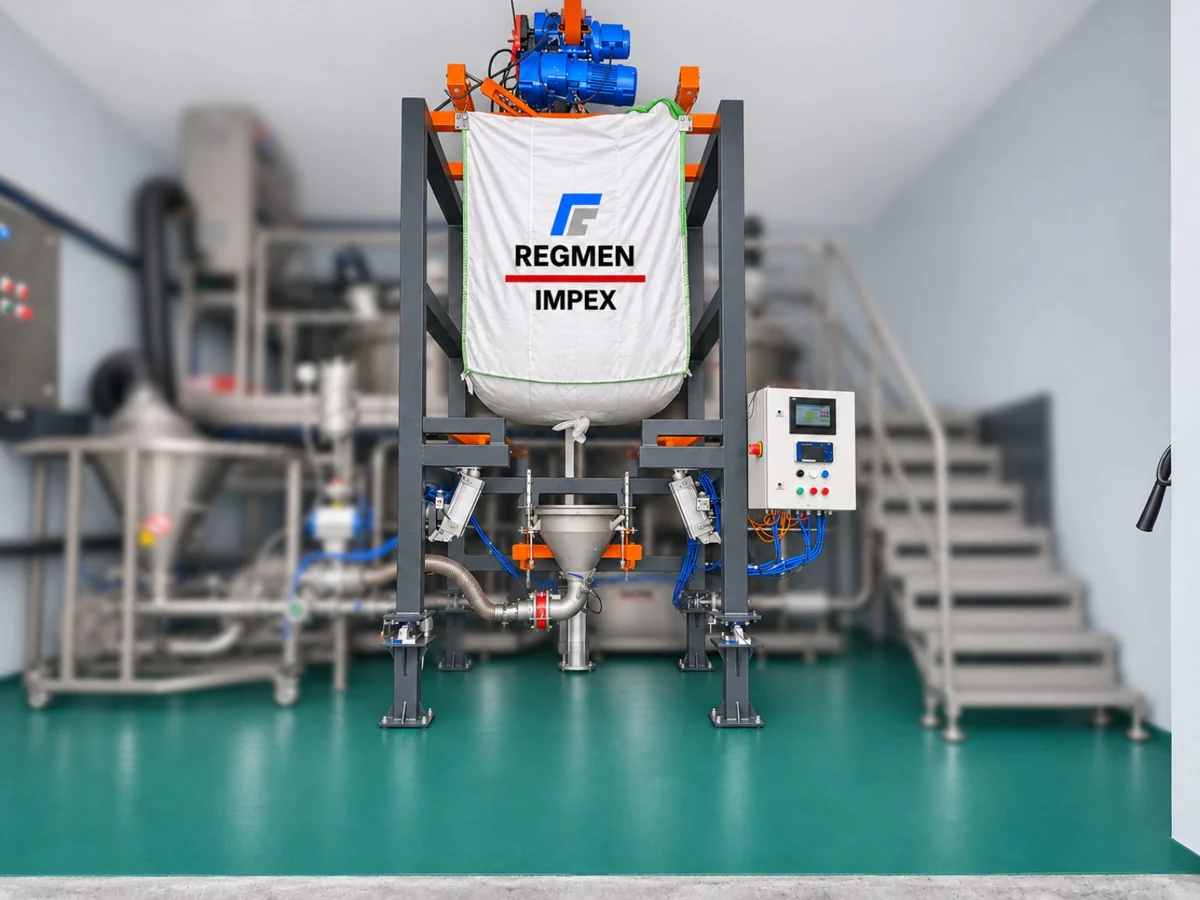 Jumbo bag discharger installed for graphite powder dispersion
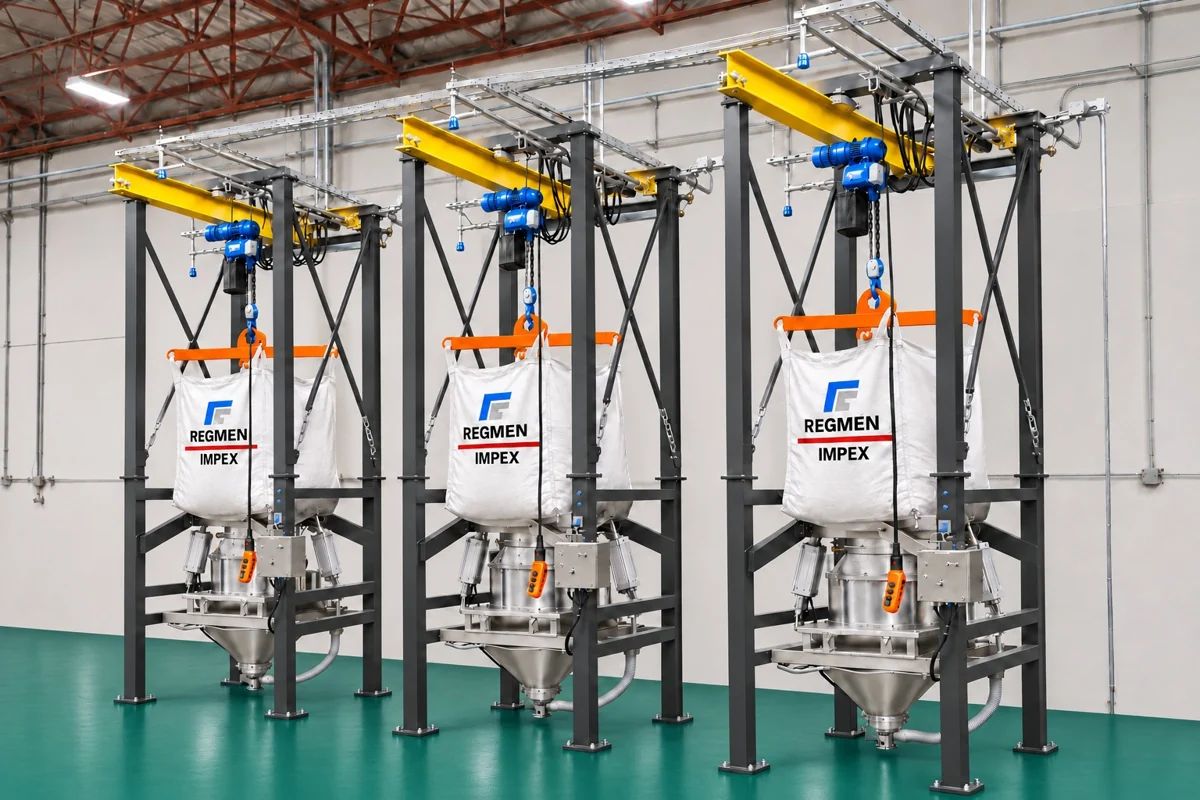 Three-station jumbo bag discharger arrangement — design render
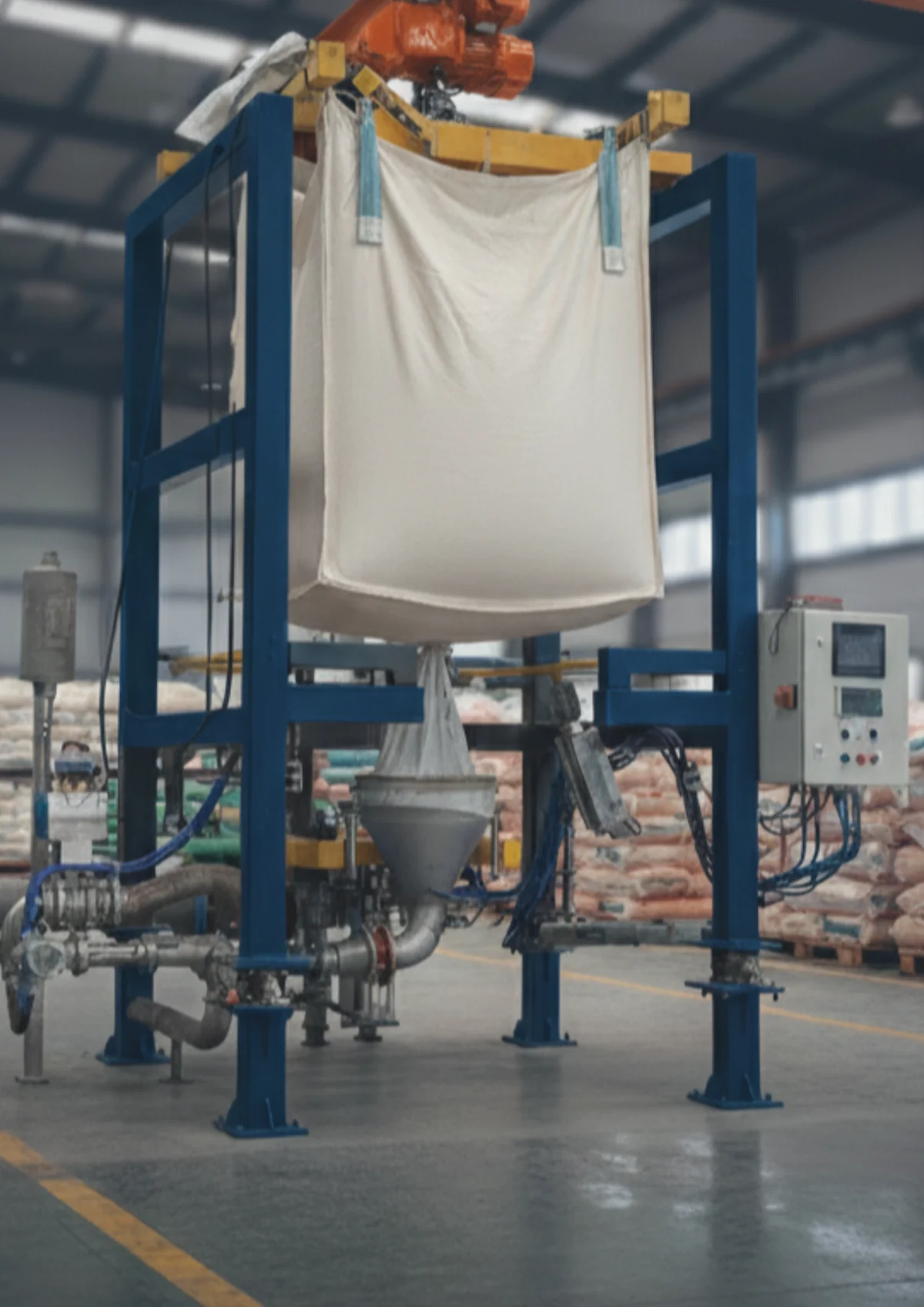 RJBU loss-in-weight arrangement — design render
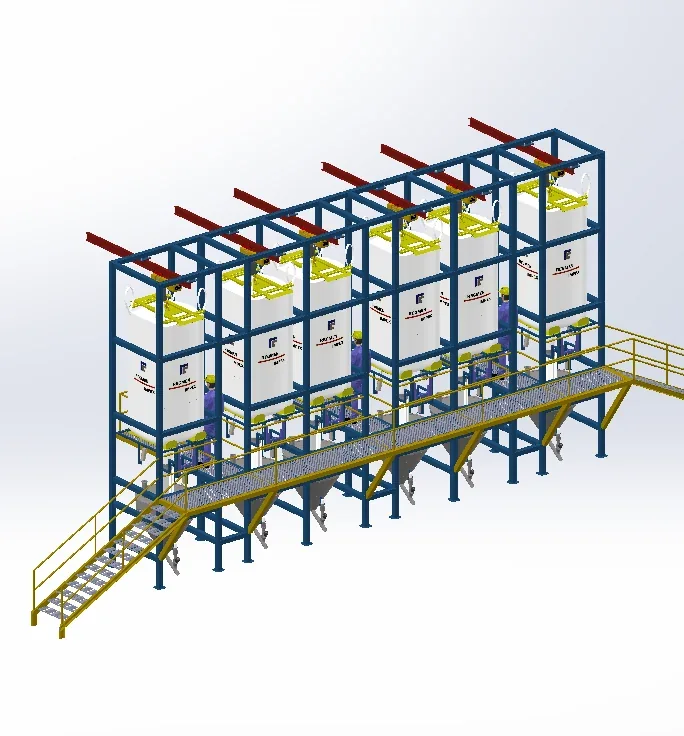 Multi-station unloading — layout perspective
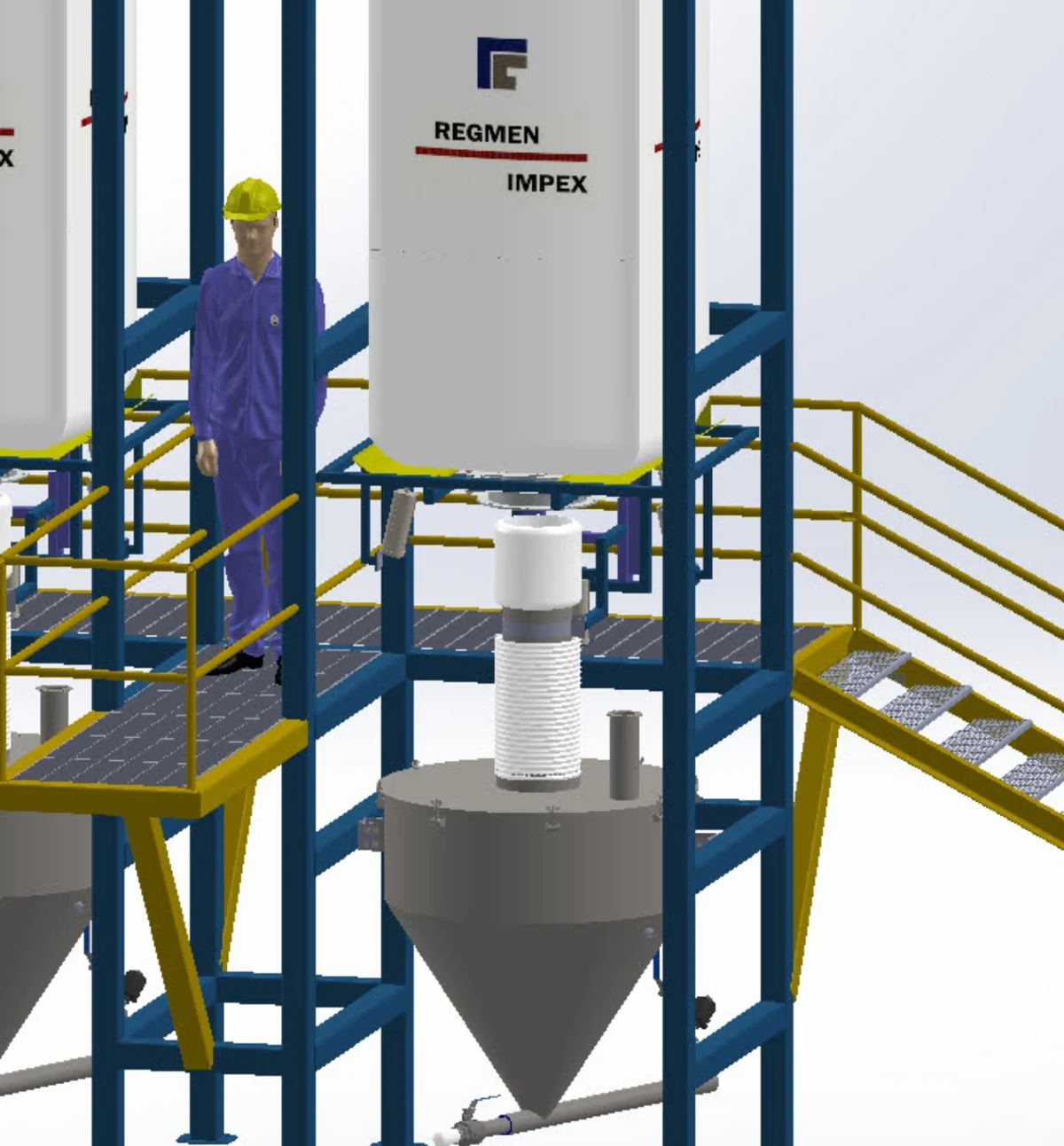 Spout docking station & bag massager — design render
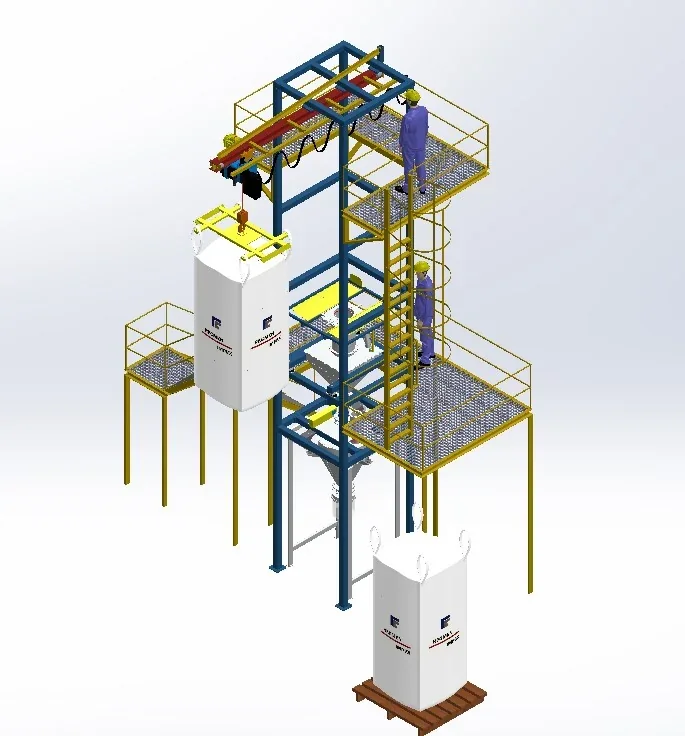 Hoist loading & bag transfer — design render
Before you specify
No. The general unloading range includes bulk bags up to 2 tons, while the rated load of the selected model is confirmed during engineering. The range statement is not a capacity claim for every configuration.
Flow assistance can include bag massagers, vibration or aeration. Share the material grade, bulk density and flow behaviour so the method can be selected for the application.
Yes. Unloading can be combined with conveying, weighing and downstream feeding. REGMEN’s Auto Silica and Auto Carbon systems present complete bulk-bag-to-mixer arrangements.
The clear installation height, loaded bag dimensions, lifting method, discharge elevation and maintenance access must be checked together. No single minimum headroom is assumed for all bags and layouts.
After the equipment arrives
Discuss site access, equipment interfaces and start-up requirements with our team.
Plan operating guidance and routine checks around your equipment and process.
Contact REGMEN for troubleshooting, replacement components and equipment support.
A useful starting point
Share the operating conditions so we can select the equipment and prepare an application-specific proposal.
Your process. Our engineering.
Tell us what you handle, how much you need to move, and where it needs to go.
Request a custom quote